Bach's Hidden Cantus
The rebirth of a forgotten practice: Violin and Organ Pedalboard
Deconstruction and Reworking of the Chorale Prelude BWV 659
OVNI Baroque: a meeting in the sign of the uncommon
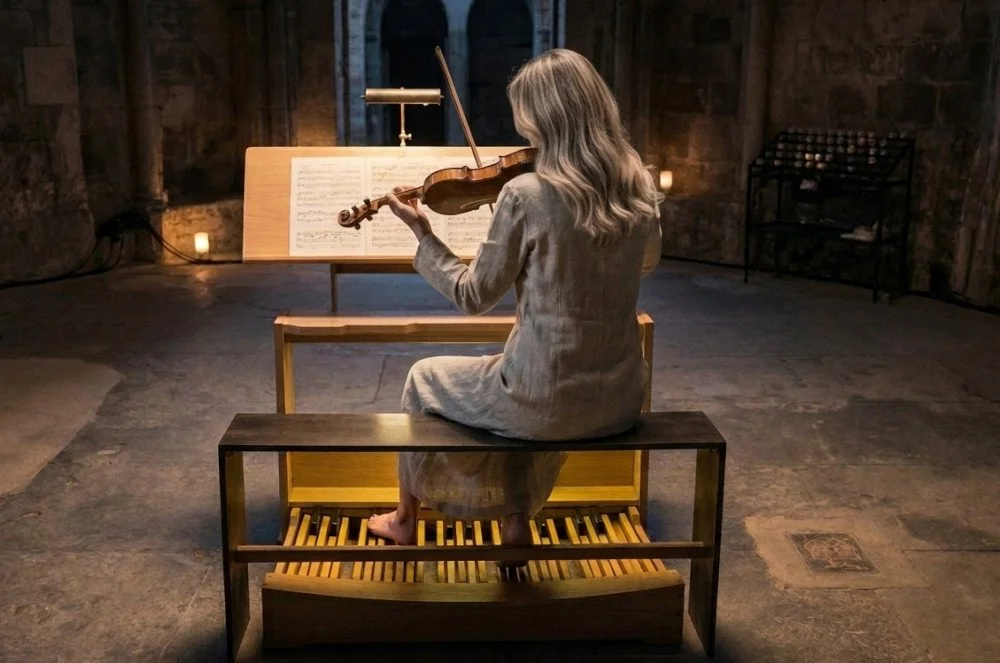
This project stems from a striking encounter with the work of Emmanuelle Dauvin, a musician capable of reviving a Baroque performance practice as fascinating as it is complex: simultaneously playing the violin and the organ pedalboard.
The very name of her project, OVNI (Orgue - Violon - Nouvelle Interprétation), evokes the idea of an "Unidentified Musical Object"—an anomaly that challenges modern conventions and requires the composer to completely rethink writing for the instrument.
The Historical Context
The Chorale Prelude Nun komm, der Heiden Heiland (BWV 659) belongs to the Great Eighteen Chorale Preludes (Leipzig Chorales), a collection of late reworkings where Bach revisits Lutheran chorales with maximum expressive and theological density.
In this piece, the chorale melody unfolds as an ornamented cantus firmus, wrapped in an intense and contemplative counterpoint. Inspired by the Ambrosian hymn Veni redemptor gentium, the music transforms the invocation for the Savior's coming into a fabric of voices conversing with spiritual intensity, making the tension between waiting and joy audible.
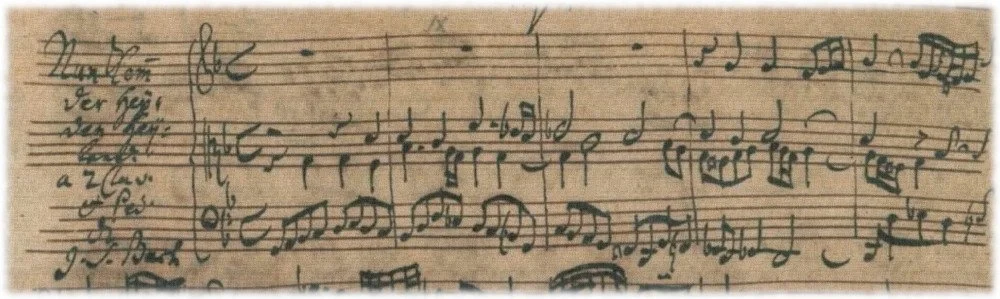
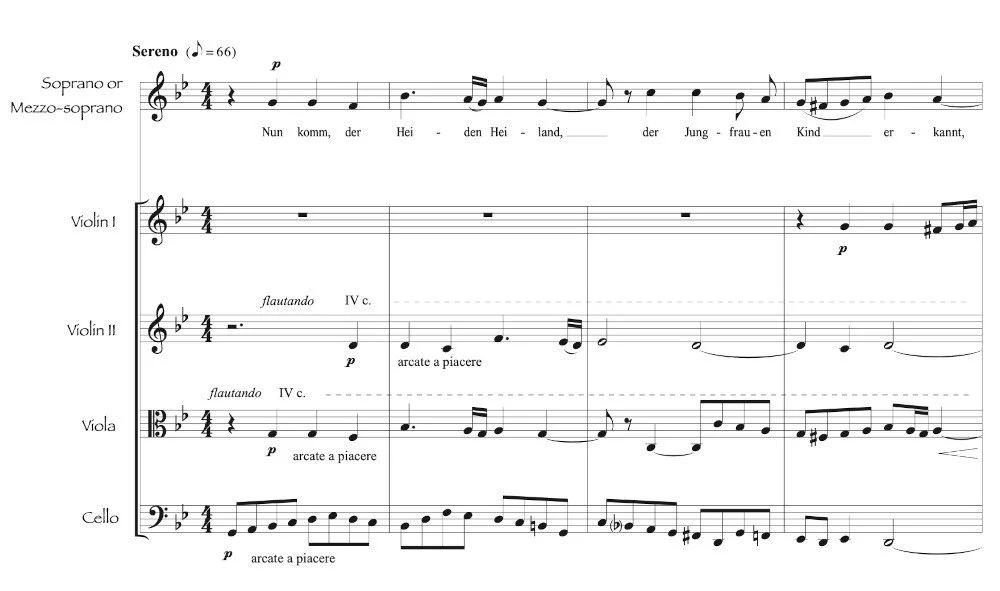
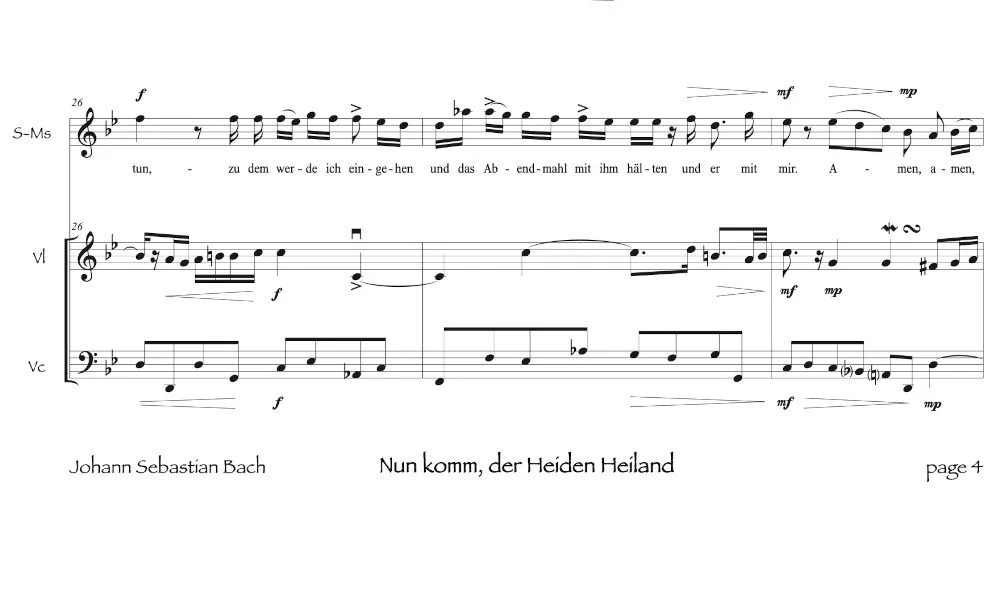
An Experience of "Deconstruction"
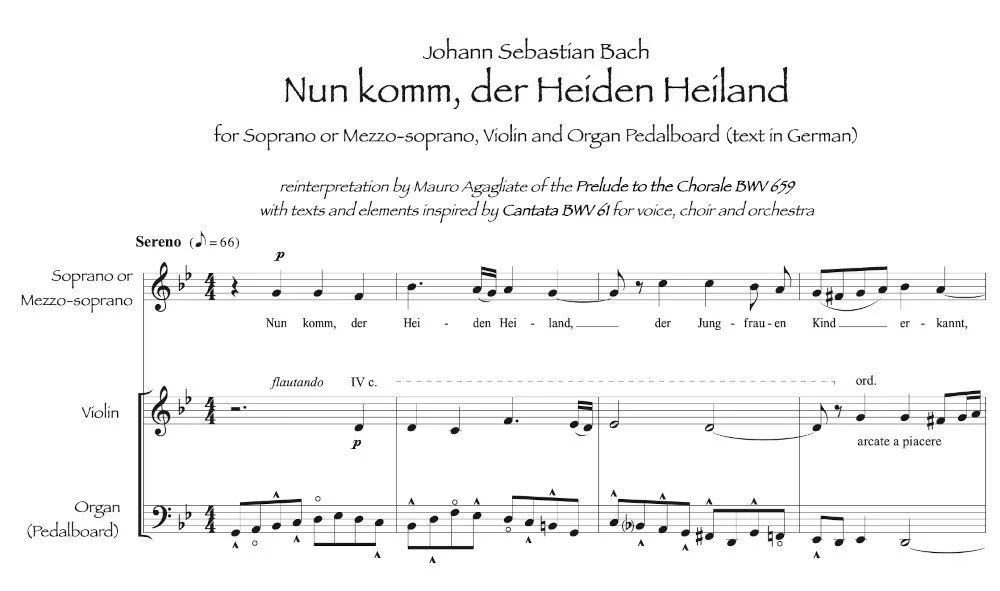
This version proposes an act of listening and reimagining: shifting the focus from traditional vocal hierarchies to entrust the sung words of the Chorale to an inner voice of the Prelude. This seemingly minimal gesture reveals two dimensions:
Awe at Bach's construction, which remains perfectly coherent even when the arrangement of voices is altered.
Vocal dignity granted to a line originally conceived as instrumental texture, transforming the Prelude into a hybrid creature, halfway between instrumental contemplation and choral proclamation.
The Meaning of the Reworking
The transcription was created for three distinct ensembles. The vocal part is intended for a Soprano or Mezzo-Soprano:
Voice, Violin, and Organ Pedalboard
Voice, Violin, and Cello
Voice and String Quartet
It is an invitation to be surprised by the fact that even when voices change roles and perspectives, offering new resonances, the music continues to sustain itself with undiminished beauty. In this way, the listener can discover the universal power of Bach's message.