The Sound of Bosch
A project of composition and sonic research
Resonances on the Triptych
The Garden of Earthly Delights
by Hieronymus Bosch
A post-digital sonic ecosystem
The Manifesto
This project arises from the challenge of interpreting the blurred boundary between biological and computational creation. It is not a mere soundtrack, but a philosophical inquiry: how can the human being maintain creative hegemony in the age of automation? At this frontier of the man-machine relationship, the composer becomes a director of complexity, utilizing Artificial Intelligence as a mirror of chaos — a "set of algorithmic brushes" governed by the rigor of human intellect.
Image as Territory
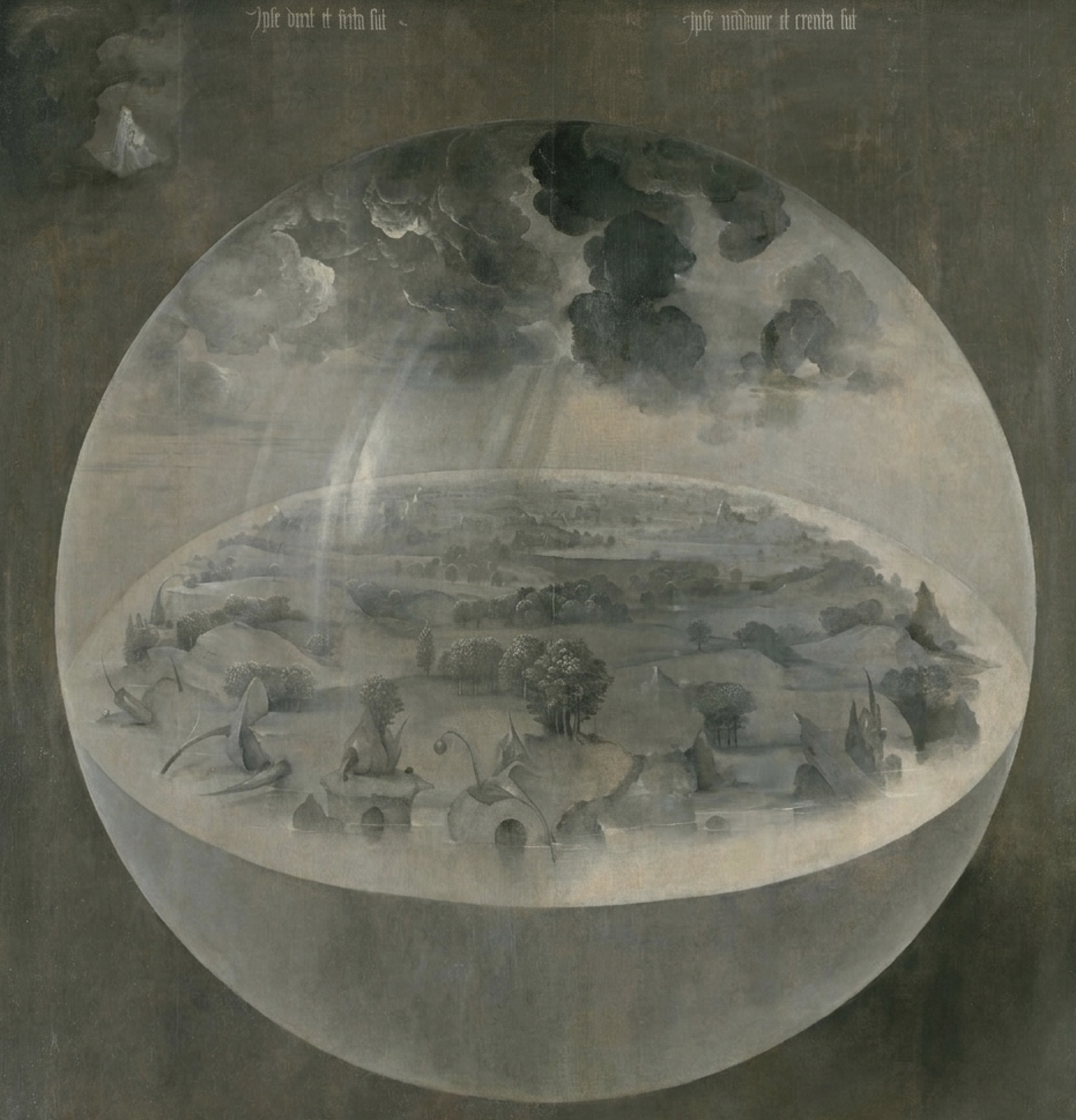
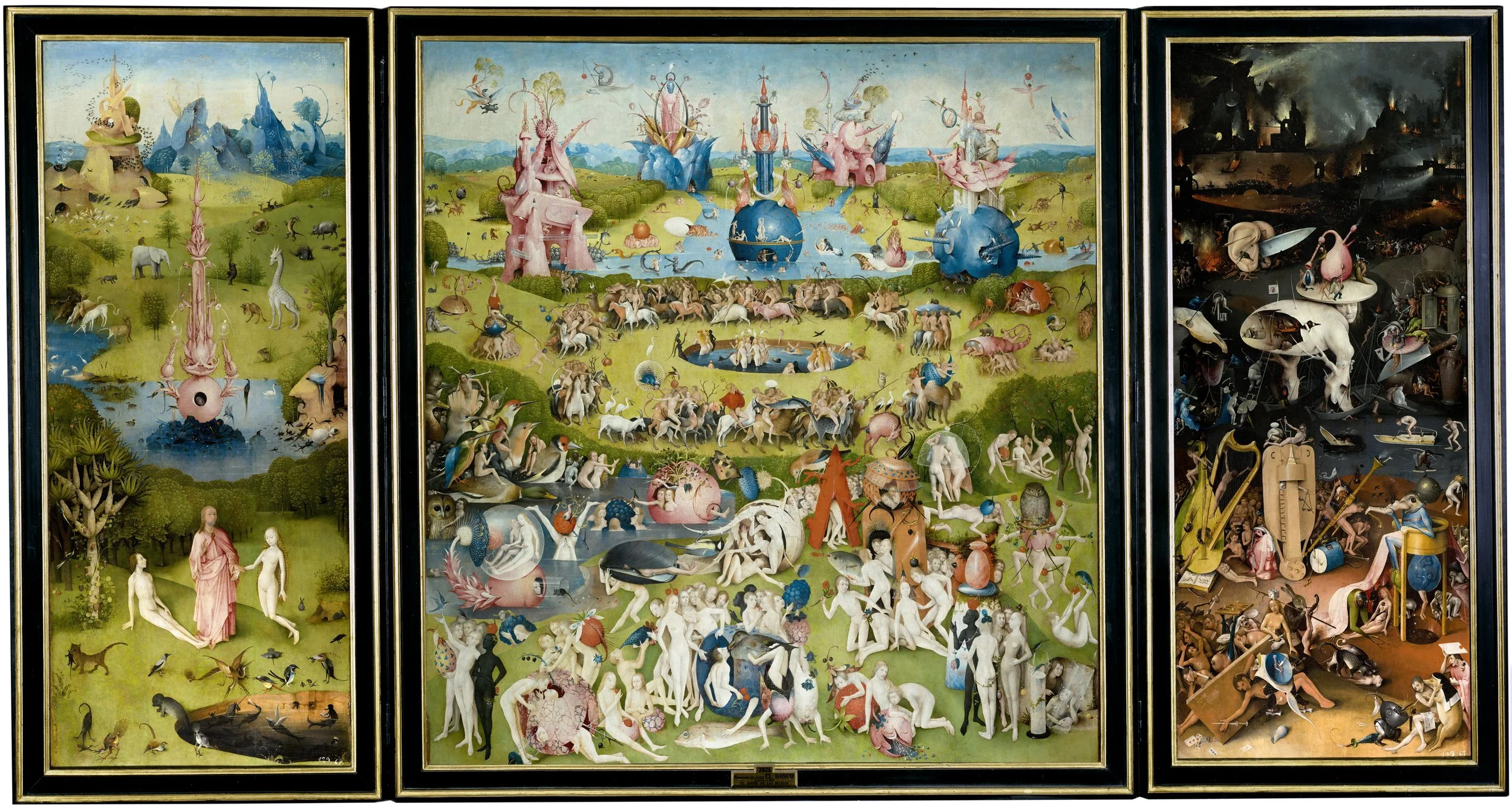
The starting point is a challenge to resolution: a "monstre" image exceeding 870 million pixels, allowing one to penetrate Bosch's pictorial matter down to the individual brushstrokes on the oak wood.
This visual vertigo serves as a score: every square centimeter of the Triptych has been mapped to generate a specific acoustic response, transforming the painting into a living sonic architecture.
Navigation: Between Instinct and Liturgy
The visitor explores the work through two mirrored modes:
Free Exploration: A private and unpredictable dialogue where the music responds spatially to eye movements, activating and deactivating based on the details observed.
Guided Narrative: A "concert-lesson" where the camera moves with surgical precision through the chapters of Bosch's exegesis, and the music acts as a critical guide to the image.
Sound Direction
The revolutionary aspect lies in dynamic composition. Rather than a static soundtrack, it is a fluid stream determined by proximity: the closer one gets to a detail, the more its "voice" isolates itself from the choir.
The primordial chaos perceived from a distance resolves, upon approach, into distinct sounds and noises — varying in structure and complexity. It is a thematic transfiguration following sacred history: from the purity of Creation to the grotesque distortion of Hell.