Scratches in the Silence: The Mozarabic Enigma
A sonic investigation into a surviving fragment of Pre-Gregorian chant
Commissioned by the University of Bristol
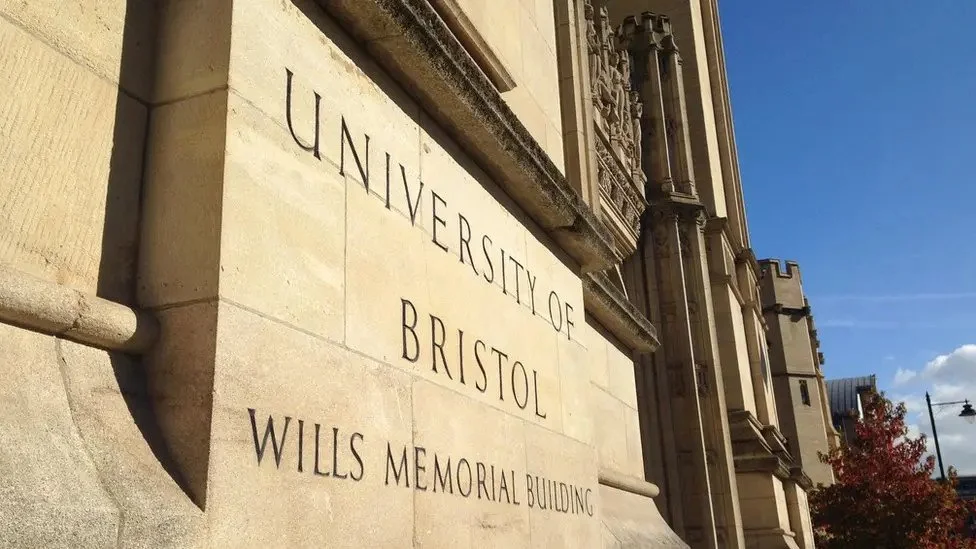
The University of Bristol: An Avant-Garde at the Heart of Tradition
The University of Bristol is not only one of the UK’s academic pillars but a place where musical research breathes a rare freedom.
Based in the evocative Victoria Rooms, the Music Department views prestige not as dusty preservation, but as a dynamic energy pushing composers to reconsider the boundaries of Western music history.
In this context of scientific rigor and creative openness, projects are born that challenge established narratives.
Old Hispanic Office: Resonating the Shards of Time
At the center of this mission is the Old Hispanic Office, a research division dedicated to the study of Mozarabic (Old Hispanic) chant. Under the leadership of Professor Emma Hornby—and supported by the European Research Council (ERC)—this project has undertaken a nearly archaeological task: recovering a repertoire that the dominance of Gregorian chant once attempted to erase.
I was entrusted with the challenge of inhabiting this boundary: not to perform a simple arrangement, but to trigger a true contemporary transfiguration of material that has survived centuries of oblivion.
The Material: An Archaeology of the Sign
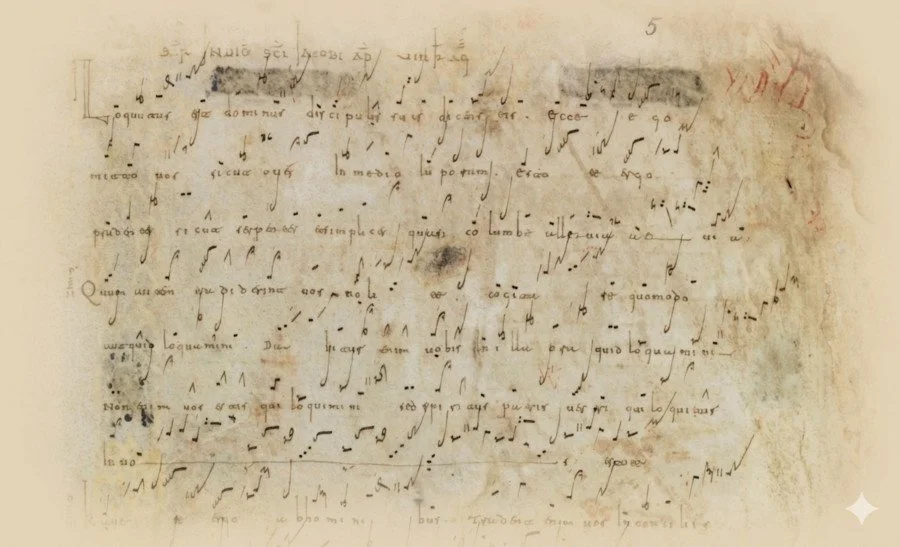
Working on Mozarabic chant means confronting an absence: the certainty of pitch.
The starting material is not just music; it is a graphic enigma that required layers of study to become audible again. These three stages represent the evolution of the 'Dies mei transierunt' (a piece from the burial rite) from the original manuscript to contemporary notation.
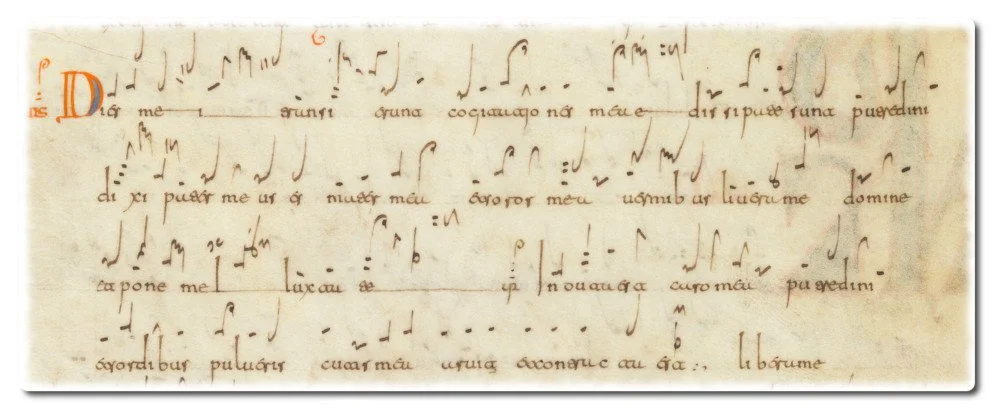
The Original Manuscript: Visual Notation
Source: Liber antiphonarium de toto anni circulo – folio 277v
In this phase, the chant is expressed through neumes with free diastematy. The signs do not indicate precise pitches on a staff, but rather the "gesture" of the voice: the ascent, the fall, the intensity. It is a form of writing that speaks to the singer's memory more than to the eye of the modern performer.
Modern Notation: The Definitive Translation
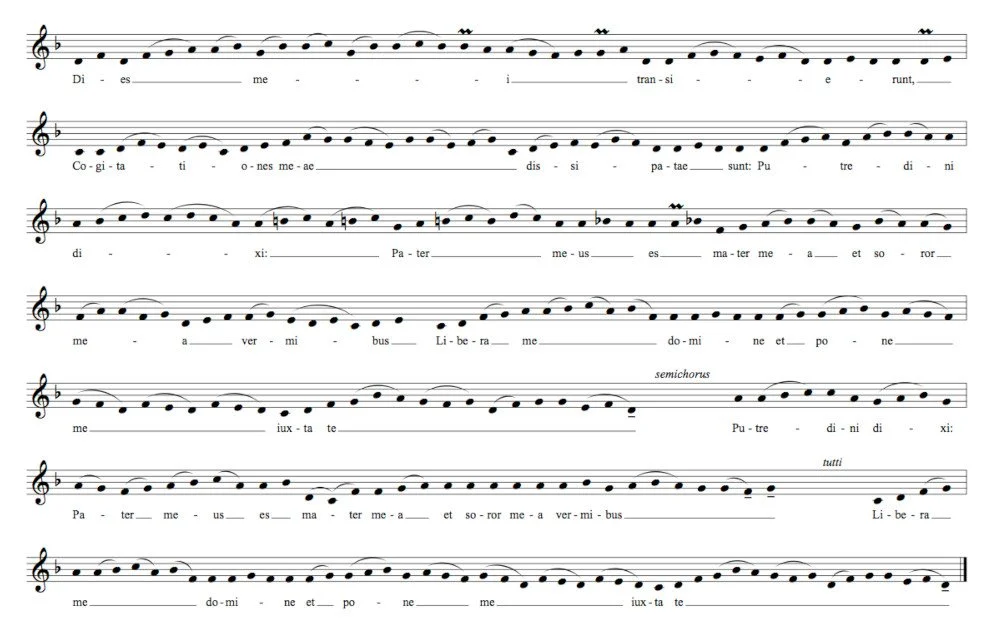
Transcription in modern notation
The melody is finally transcribed onto the five-line staff. This stage represents the point of contact with my own composition: the final decoding that allowed the original melodic cell to be isolated and then subjected to a process of decomposition and rewriting for ensemble.
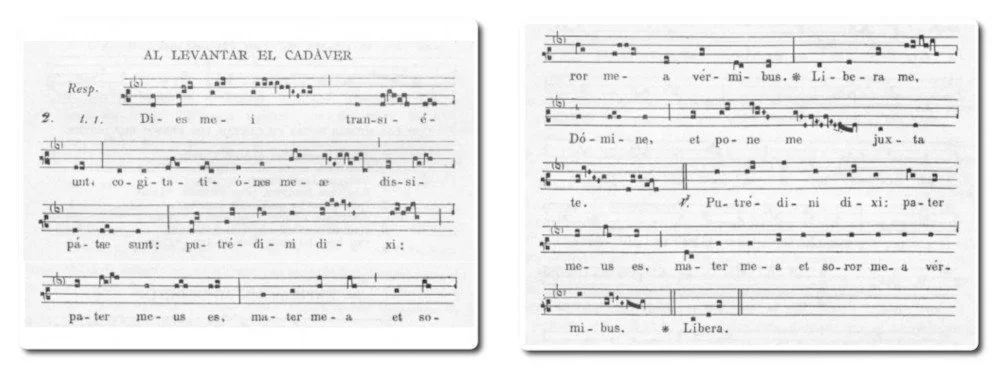
Transcription in Square Notation: The First Order
Source: El Canto Mozárabe – Estudio histórico-crítico
Here, the material is channeled into the four-line staff. It is an attempt to give a fixed placement to the intervals, using the notation typical of Gregorian chant. The melody acquires a structure but loses part of that floating freedom typical of the ancient sign.
The Generative Idea: Pointing Binoculars through Time
The approach to the Bristol commission did not stem from theoretical analysis, but from a vision: the idea that ancient music has not truly disappeared, but is simply buried under layers of sonic dust accumulated over centuries.
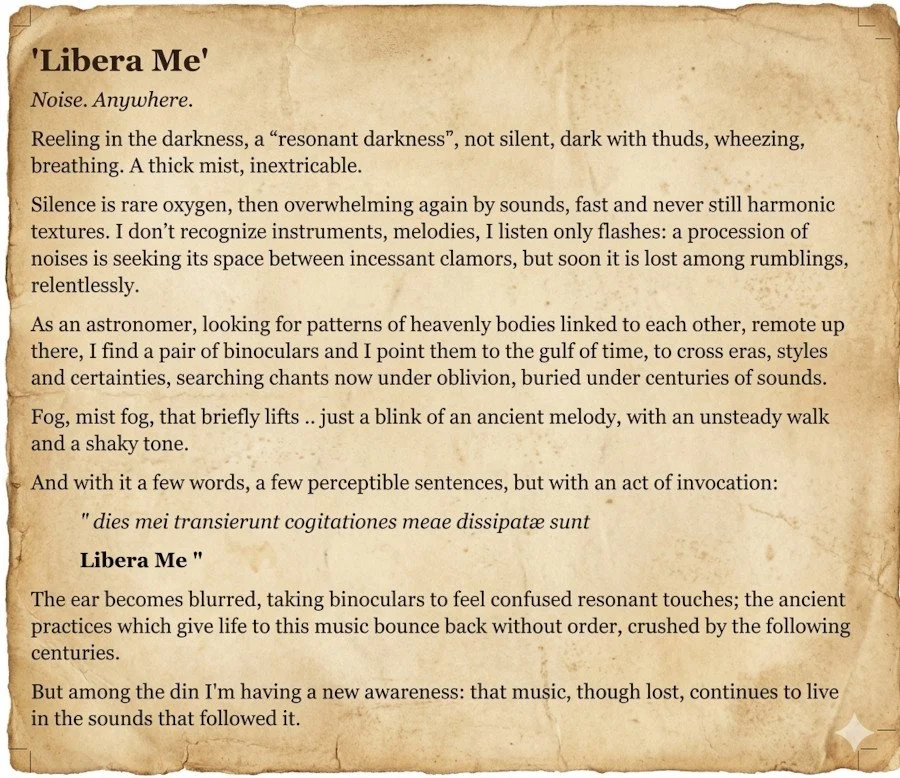
I imagined myself as a sound astronomer, intent on scanning a dark, dense sky in search of a faint light—the Mozarabic chant—that continues to travel through the void despite neglect. The following text is the poetic manifesto that guided my thoughts: a narrative that transforms the compositional process into a journey through fog, noise, and invocation. It served as my program notes in Bristol and remains today the key to entering the world of Libera Me.
The Analysis: A Sonic Stratigraphy
The composition was not a simple act of rewriting, but a molecular analysis of the chant Dies mei transierunt. I divided the work into three sections that faithfully follow the development of the ritual verses:
Section A: An exposition immersed in a "thick resonant fog."
Section B: A central episode where the rediscovered melody emerges with greater clarity.
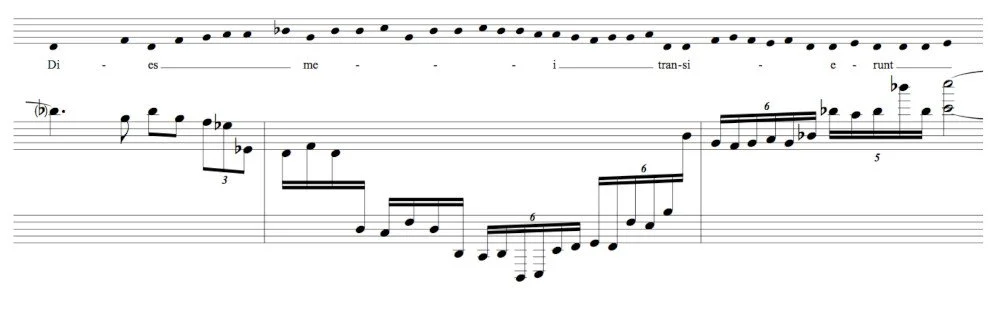
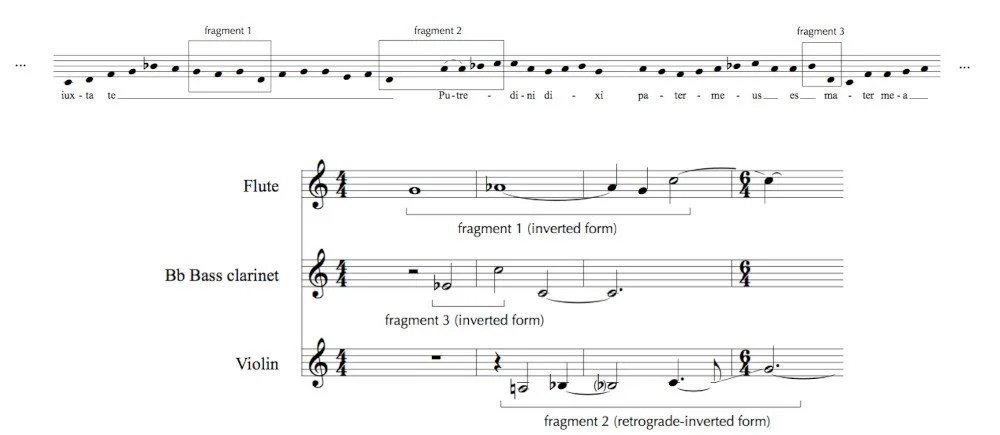
Section C: A final return to the initial, densely layered environment. To maintain the integrity of the artifact, every sound from the original piece was mapped and distributed across the instruments, creating a system of echoes. For example, the chant’s incipit—characterized by a sequence of three minor thirds—becomes a recurring signal that traverses the ensemble, appearing in the violin, flute, or bass clarinet like a trace of light reflecting between the arches of a cathedral. Even the single minor sixth interval present in the original chant was isolated and transformed into a fundamental pillar for the more "cantabile" moments of my work.
Ensemble Realization: The Purity of the Sign
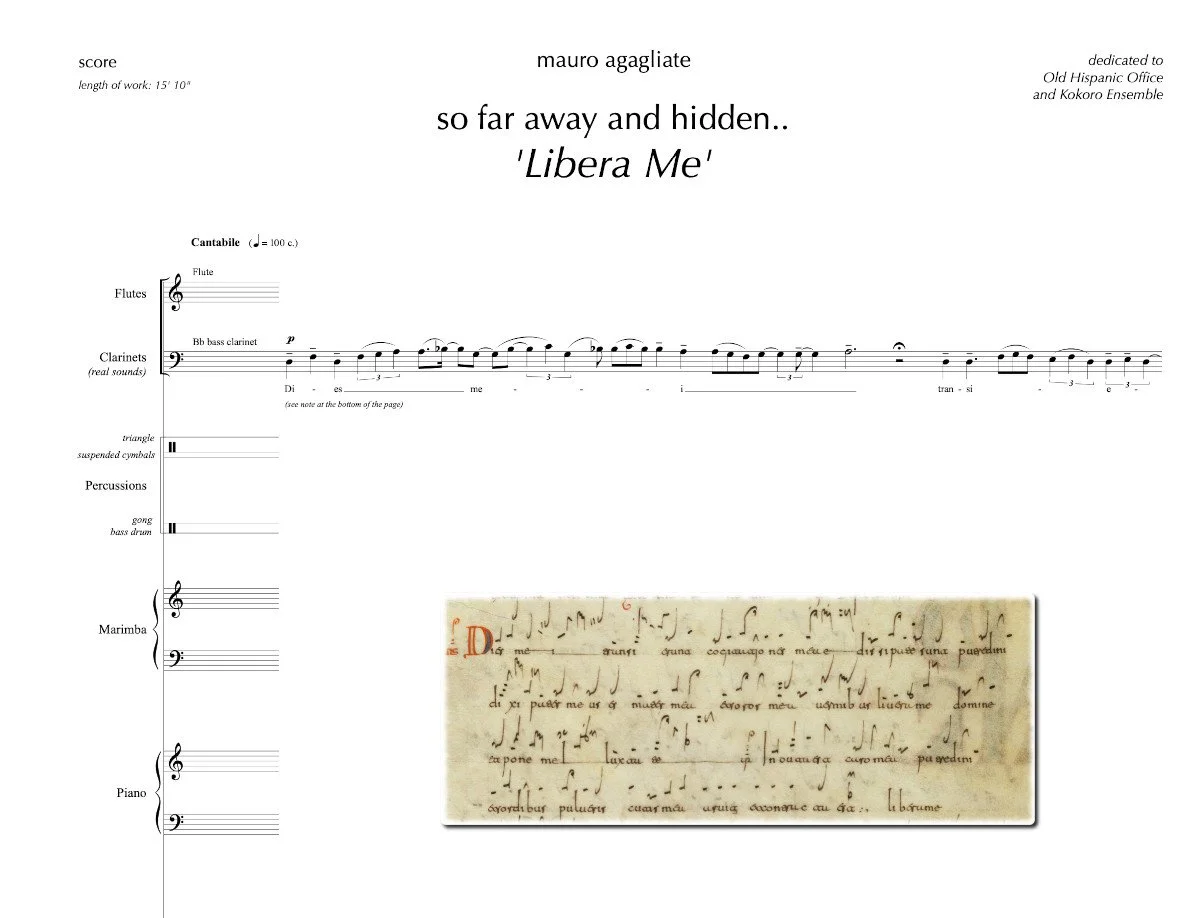
The ensemble chosen to embody this vision consists of flute, clarinet and bass clarinet, percussion and marimba, piano, violin, and cello.
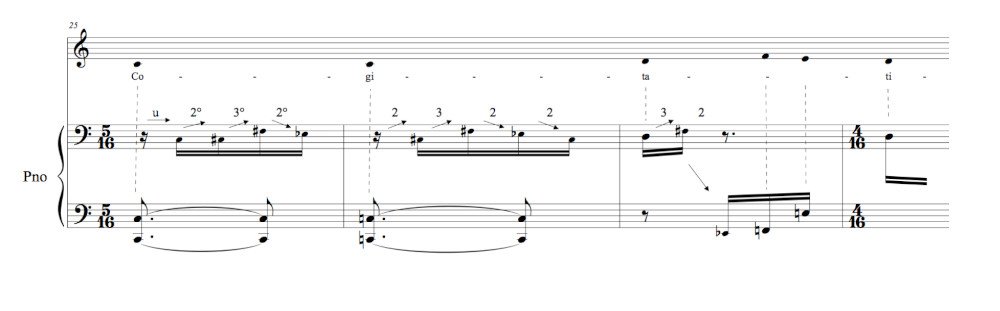
Despite the presence of instruments with a strong soloistic nature, I made a counterintuitive choice for the exposition of the work's melodic heart: the task of bringing the purity of the Mozarabic melody back to the surface was entrusted almost exclusively to the piano. The instrument, though naturally polyphonic, is here stripped of all chordal density and treated as a monophonic instrument.
This choice transforms the piano into a naked, isolated voice, capable of restoring the fragility of the ancient trace without the harmonic superstructures accumulated over centuries. While the rest of the ensemble constructs the environment—that "noise" made of breaths and "thuds" described in the prologue—the piano acts as the astronomer's binoculars: it isolates a single point of light in the gulf of time and projects it into the present with a clarity that is as reassuring as it is chilling.
The Concert: Echoes in the Victoria Rooms
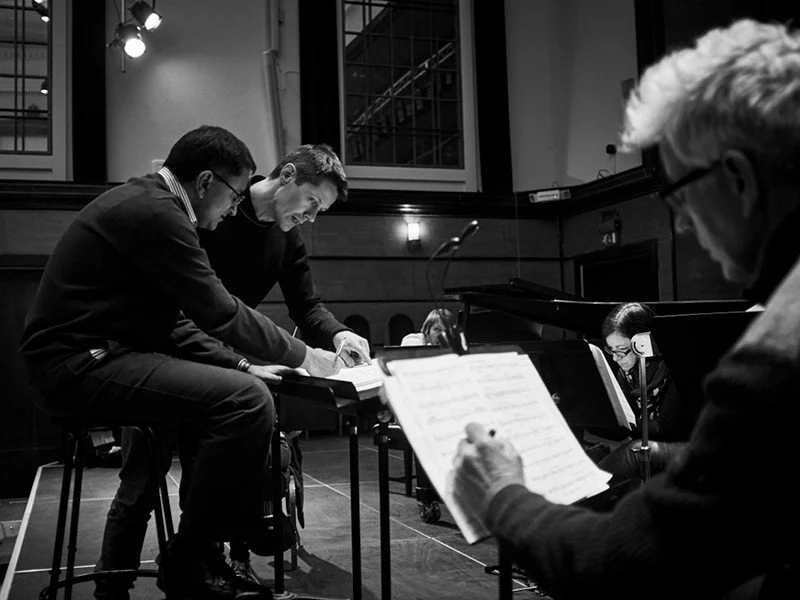
On February 5, 2016, Libera Me found its natural home beneath the imposing arches of the Victoria Rooms in Bristol.
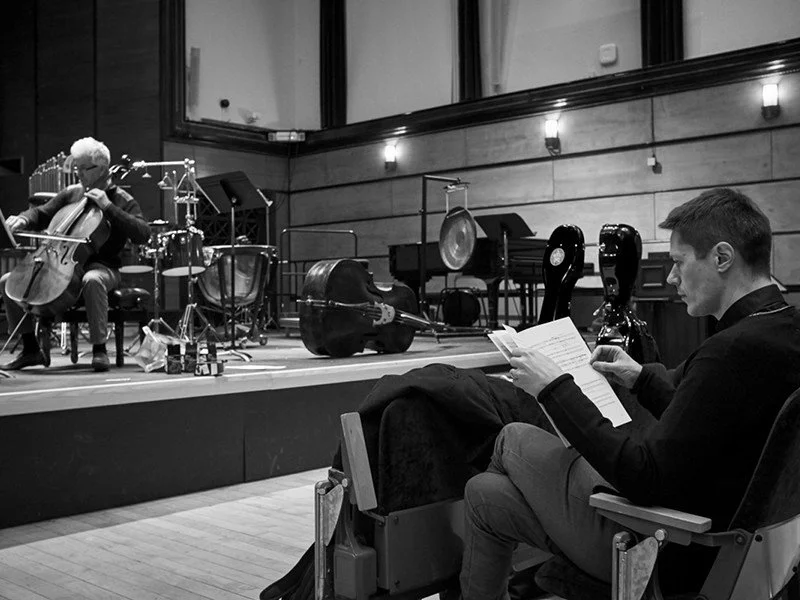
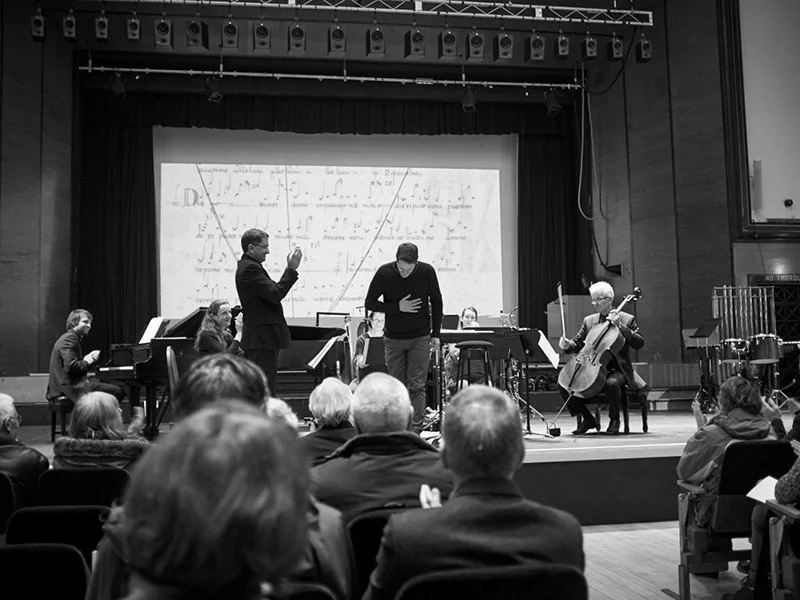
In this space, where the architecture seemed perfectly designed to embrace the sonic reflections imagined in the score, the work was performed by the Kokoro Ensemble, the contemporary music formation of the Bournemouth Symphony Orchestra. Under the direction of Maestro Mark Forkgen and featuring mezzo-soprano Angharad Lyddon, the ensemble brought to life that "resonant darkness" that had driven all the compositions selected by the University.
Seeing the audience immerse themselves in those Mozarabic fragments — rediscovered after centuries and projected into a contemporary dimension — was the moment of truth: proof that those ancient "shards" still possess an intact dramatic force, capable of speaking to the present through the filter of new writing.
Beyond the Sound: Reflections on a Journey
Years later, what remains of that Sunday at the Victoria Rooms is not just the echo of the music, but the feeling of having taken part in a necessary cultural experience.
I remember with extreme clarity the almost religious attention of a very large audience—over two hundred people—who remained in absolute and magnetic silence during the performance. In those moments, the "sonic scaffolding" of the score seemed to vibrate in perfect symbiosis with the space. Beyond the artistic success, the most stimulating aspect was collaborating with Professor Emma Hornby’s office.
Their excavation of such a remote and fragmentary repertoire is not merely a task for specialists; it is an act of safeguarding a deep European identity, often questioned by those without memory. That Bristol adventure left me with the realization that contemporary music, when rooted in such a distant past, is not a stylistic exercise but a vital bridge that continues to make our history resonate in the present.
Thank you so much, Emma and Old Hispanic Office!