Dies Mei Transierunt
An Unconventional Tuning System for a Reimagining of the Pre-Gregorian Mozarabic Repertoire
Concept: A 15-Tone-Per-Octave Model
The Narrative: A Journey Backward (Barcelona, 1218)
It all begins with a cinematic vision—an auditory hallucination set in the narrow alleys of 13th-century Barcelona. The protagonist is Hector, a man who enters the dim light of a small church and is overwhelmed by the chant of the responsory Dies mei transierunt. In this tale, which serves as the work's poetic manifesto, the recorder joins the Mozarabic choir not as mere accompaniment, but as a spiritual guide ferrying Hector (and the listener) across the centuries.
The story is more than a narrative exercise; it is the conceptual core of the piece. It describes the progressive transfiguration of ancient sound as it travels through time, adapting to unknown idioms, getting lost in alien "inns," and finally returning to its origin, forever changed. This parable of loss and the persistence of sonic memory drove me to seek a system that could capture that "otherness." If Hector’s world is now incomprehensible to us, his music must also escape the rigid confines of our tempered system.
To approach the intervallic inflections of that era—where Middle Eastern influence and pre-Gregorian fluidity ignored the stiffness of our twelve semitones—I dismantled the traditional octave. From this poetic and technical necessity, the idea emerged to subdivide the acoustic space into more parts than the usual Western twelve, paving the way for a microtonal model that restores the melody’s nature as a mystery and an ancient mirage.
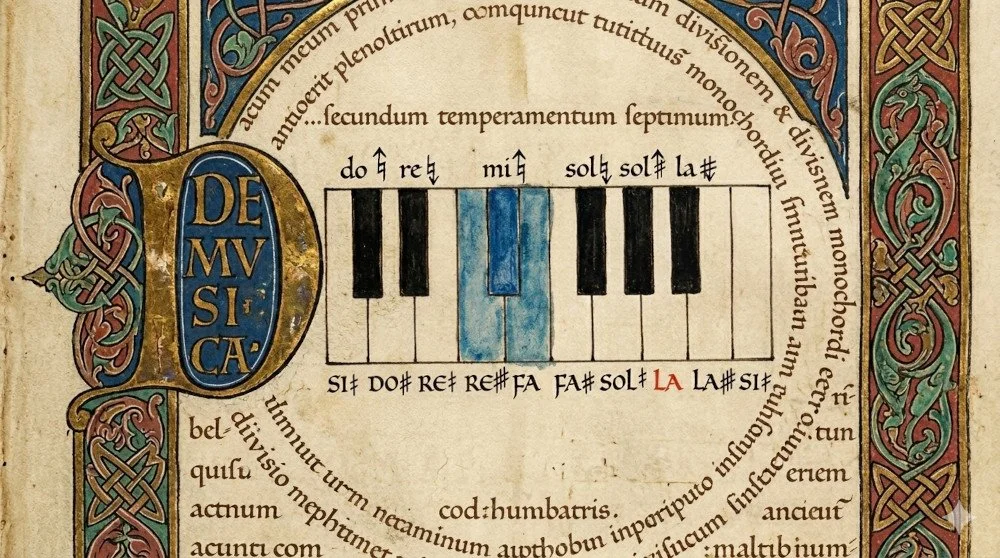
Beyond the Twelve Semitones: Genesis of the System
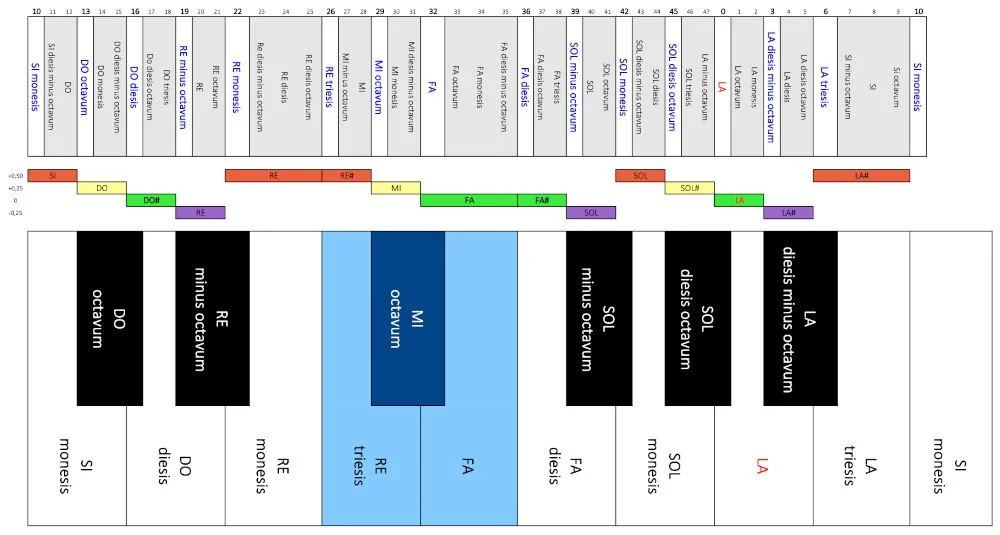
The 15 - TnET 3|4 γ system stems from the need to recover those microtonal spaces lost with the advent of equal temperament.
While the traditional system divides the octave into 12 equal parts, this model proposes a subdivision into 15 distinct sounds, organized according to non-equivalent ratios. This isn’t an arbitrary choice, but an acoustic mapping designed to reflect the fluidity and intonational "uncertainties" of the pre-Gregorian repertoire, where the distance between notes was not a rigid grid, but a living organism.
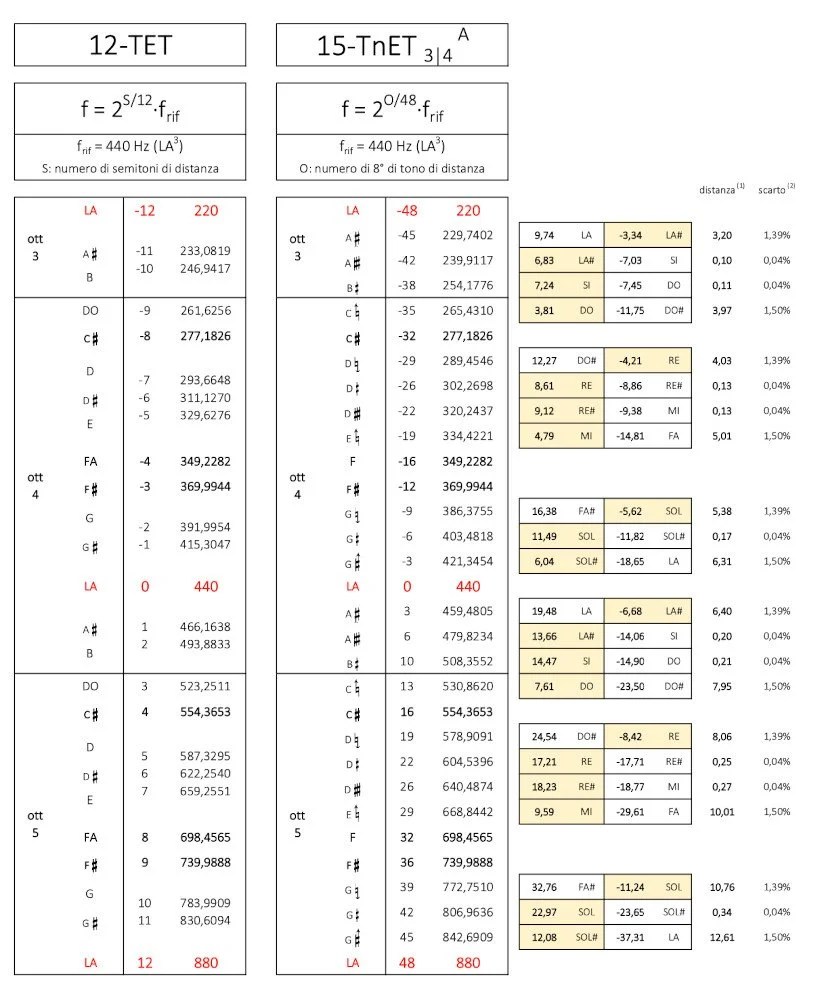
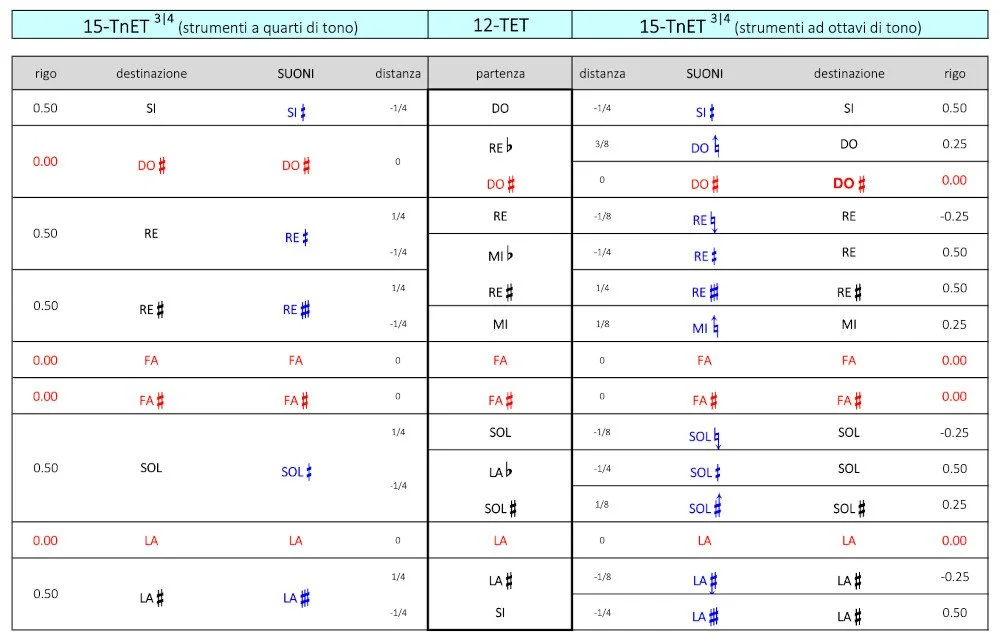
A New Chromatic Keyboard: Naming and Ratios
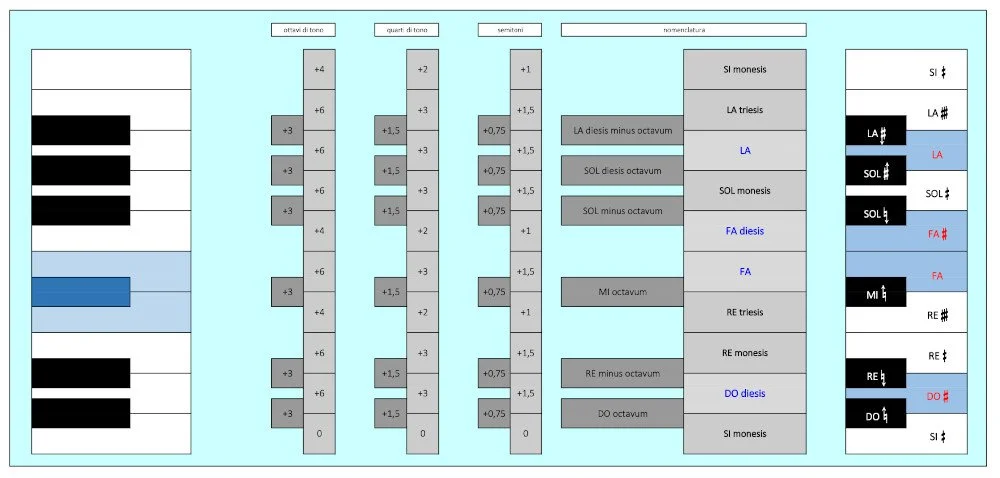
To visualize this system, imagine an expanded piano keyboard. In this new order, between C and D, for instance, there is no longer just one black key, but a succession of frequencies that redefine the concept of accidental.
The sounds are renamed to reflect this density, creating a scale that moves not through standardized "leaps," but through progressive nuances. This system allows us to touch points of resonance that are simply unplayable—and thus unhearable—in a 12-tone syste
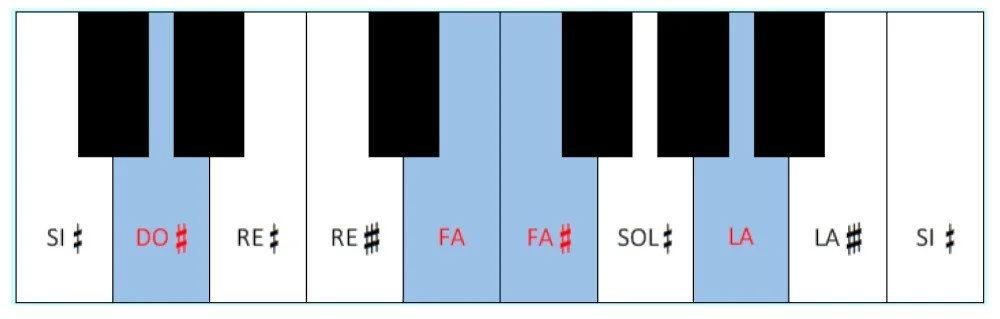
Playability and Sonic Migration
One of the main challenges of the 15 - TnET 3|4 γ is its practical application on traditional instruments.
Through the study of woodwind fingerings and the use of extended techniques in strings, it is possible to "migrate" from the equal-tempered system to the 15-tone one without losing the instrument's expressiveness. The result is an uncanny listening experience: the ear recognizes the profile of the Mozarabic theme but perceives it immersed in a dimension that is simultaneously archaic and futuristic—much like Hector’s journey in the story.
Notation and Micro-intervals
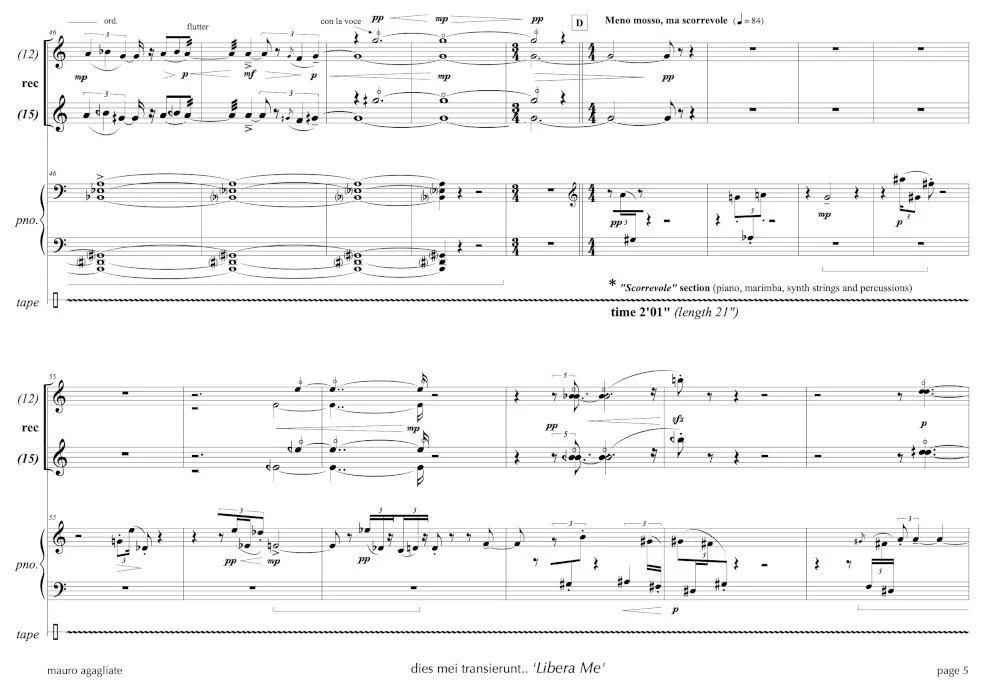
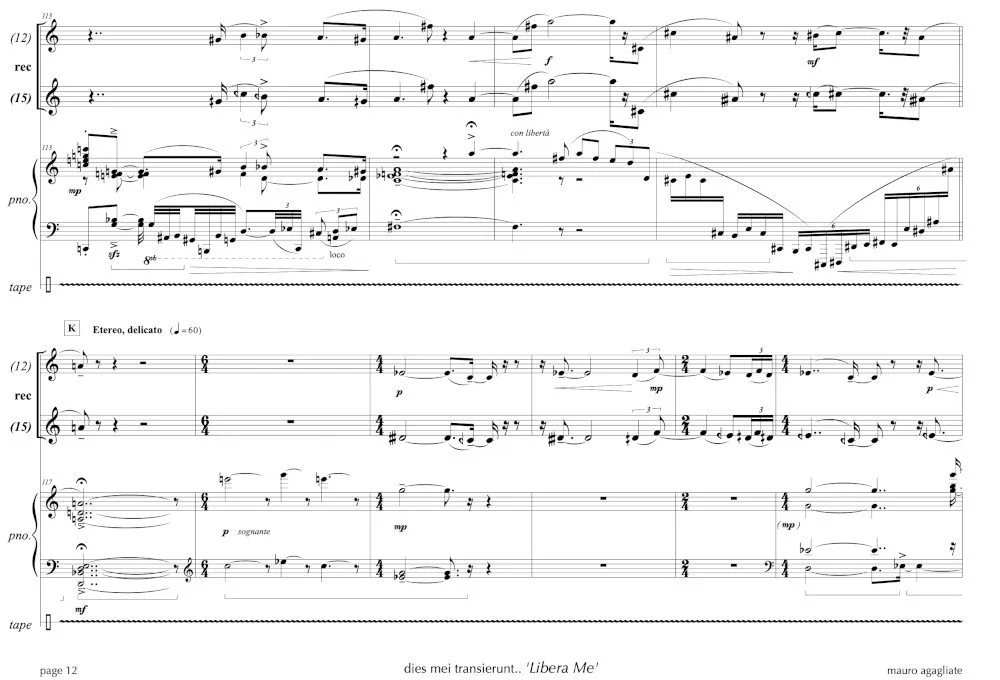
Writing this music required an evolution of traditional notation. I introduced specific symbols—largely derived from international notation for intervals smaller than semitones—based on a logic of "fractioning" the semitone.
These symbols indicate the exact pitch within the 15-part grid to the performer. This graphic precision is essential for managing the coexistence of the original chant structure (Dies mei transierunt) and its microtonal expansion, allowing the melody to "slip" through the cracks of our habitual perception.
The Score: Between Microtonality and Soundscape
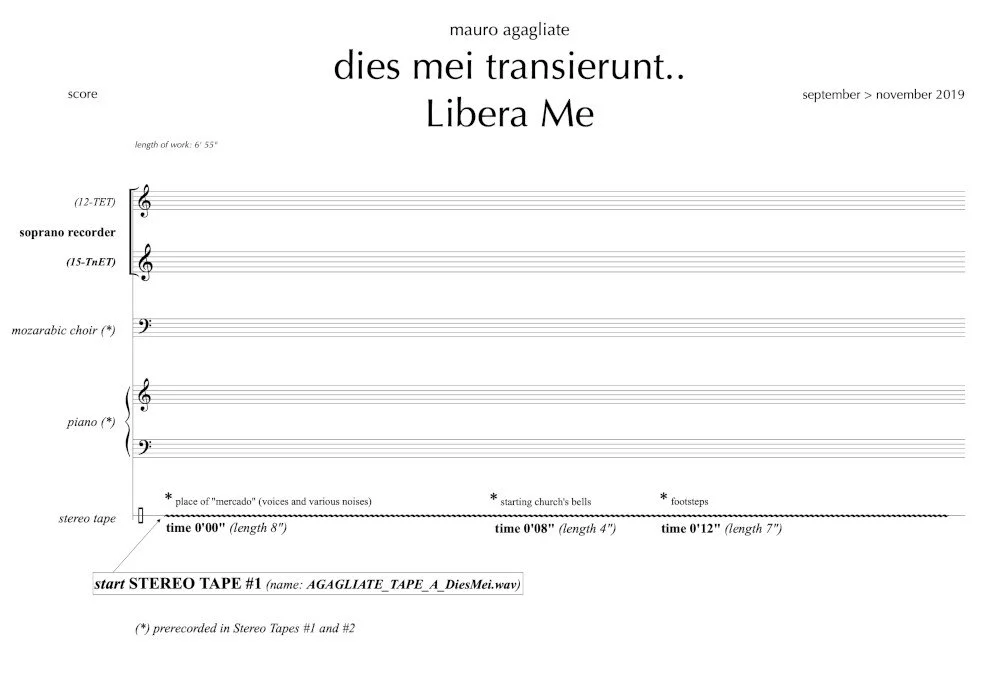
The score is conceived as a multi-layered system. To assist the performer (soprano recorder), I adopted a double-stave solution: the first stave uses standard 12-TET notation, while the second indicates the exact microtonal pitch in the 15 - TnET 3|4 A system. This allows the soloist to navigate "tone fractions" with extreme precision.
The soloist interacts with a complex electroacoustic setup featuring two pre-recorded tracks:
Historical Reconstruction: Containing the Mozarabic choir and piano (treated with eighth-tones in the electronic version), exposing the core of the original chant.
Narrative Soundscape: To recreate Hector’s world, I layered ambient sounds: the clamor of a Barcelona market, tolling bells, the interior sounds of the church, and even a medieval inn.
This interaction transforms the performance into an immersive experience: the recorder becomes the "traveler" crossing these environments, acting as a bridge between the noise of the world and the abstract purity of microtonal geometry.
Performances
NYCEMF New York 2020
The theoretical and compositional value of Dies mei transierunt was further solidified in 2020 through its selection for the New York City Electroacoustic Music Festival (NYCEMF).
Chosen as a winner of the international call for works, the piece was featured in the program of what is widely considered the largest and most prestigious showcase for electroacoustic music in the United States. As a global hub for technological innovation applied to sound, the festival provided the ideal platform to present the version of the work scored for flute and pre-recorded track.
Being selected in such a highly competitive environment confirmed that the reimagining of Mozarabic repertoire through the 15-tone system is not merely academic speculation, but a compelling artistic proposal capable of engaging with the international avant-garde. This recognition marked the project's official entry into the contemporary music circuit across the Atlantic, highlighting the powerful fusion between the archaic roots of the Iberian Peninsula and the most modern techniques of synthesis and sonic spatialization.
MikroFest Vilnius 2021
In September 2021, the journey reached a milestone at MikroFest Vilnius, organized by the Lithuanian section of the ISCM.
The piece was performed on September 11 at the evocative Concert Hall of the Franciscan Monastery in Vilnius—a space whose acoustics and history perfectly resonated with the score’s medieval roots and futuristic ambitions. Giving voice to the "traveler" Hector was Norwegian flutist Linnéa Sundfær Casserley, whose extraordinary sensitivity in micro-intervallic control rendered the minute nuances of the 15-part system audible.
Dialogue between the recorder and electronic tracks within the walls of an ancient Lithuanian monastery fulfilled the tale started in Barcelona: music, though transformed by mathematical models, rediscovered its ability to inhabit sacred spaces and speak across centuries.


Mettili in risalto
Tutto inizia con un'idea. Forse vuoi lanciare un'attività. Forse vuoi trasformare un hobby in qualcosa di più. O magari hai un progetto creativo da condividere con il mondo. Di qualunque cosa si tratti, il modo in cui racconti la tua storia online può fare la differenza.

Fatti notare.
Tutto inizia con un'idea. Forse vuoi lanciare un'attività. Forse vuoi trasformare un hobby in qualcosa di più. O magari hai un progetto creativo da condividere con il mondo. Di qualunque cosa si tratti, il modo in cui racconti la tua storia online può fare la differenza.