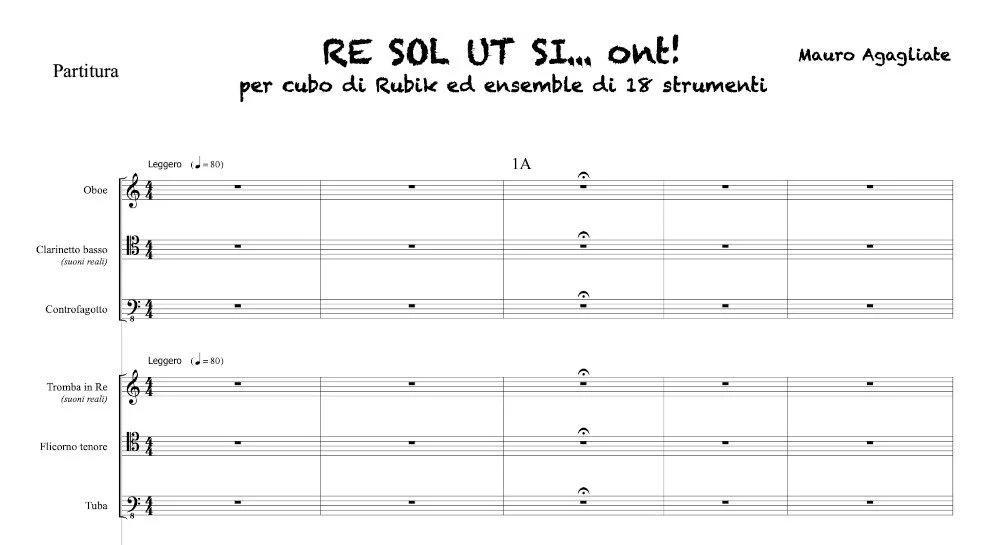
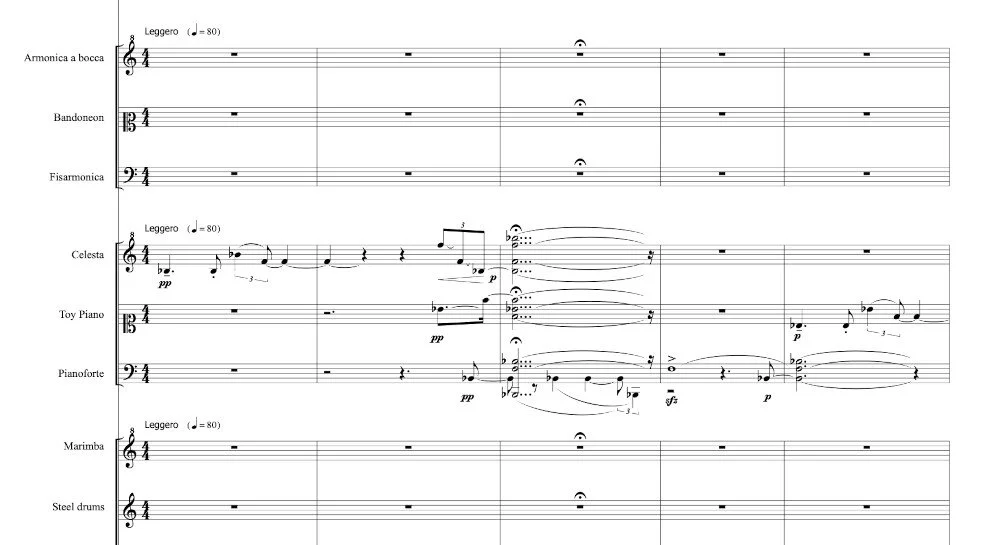
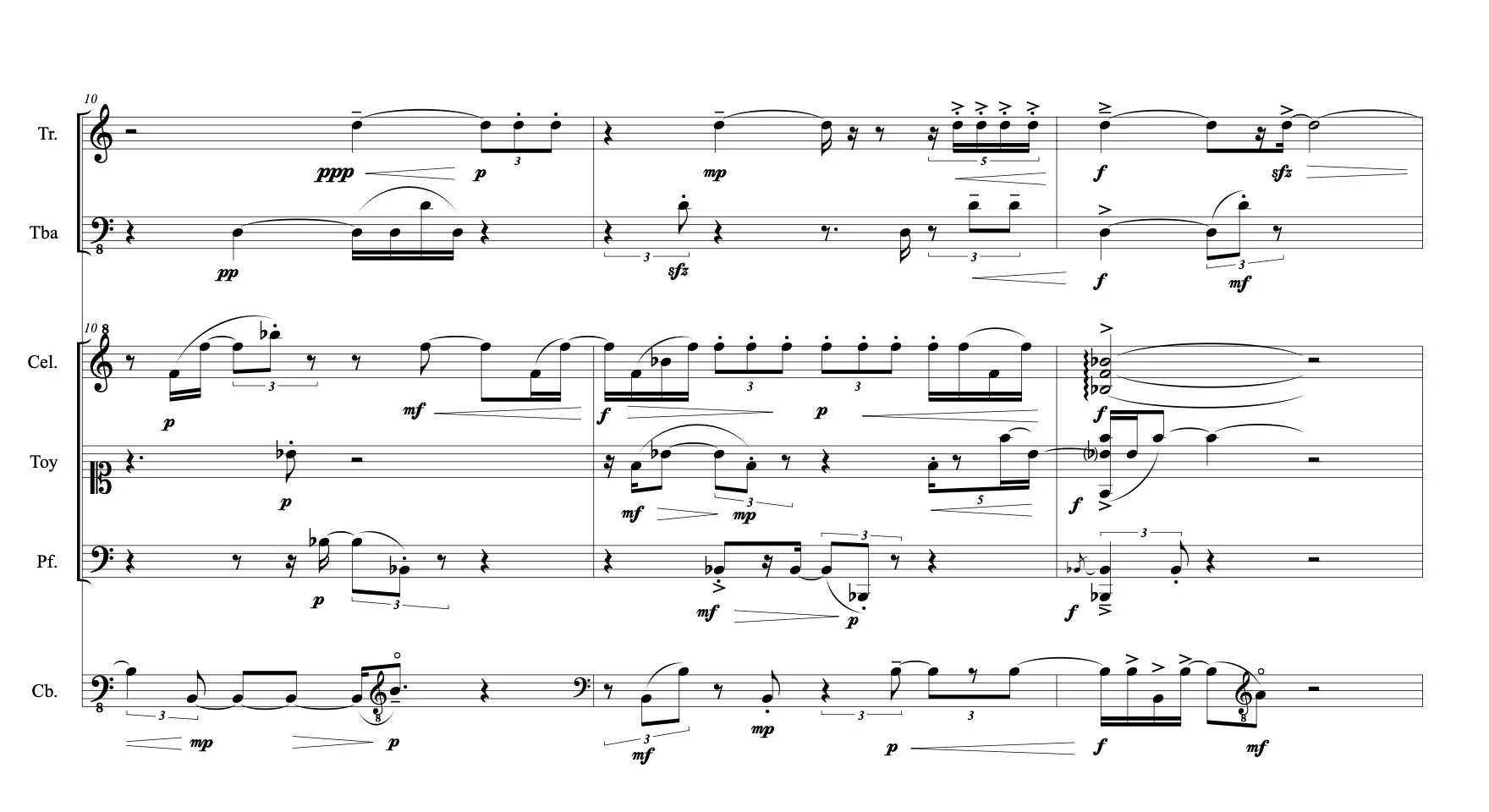
Re Sol Ut Si.. ont!
From the Rubik’s Cube algorithm to the musical score
The rotations of the Cube transformed into a sonic architecture for 18 instruments
Re Sol Ut Si.. ont! The Sonic Resolution of the Cube
This project stems from an unusual intellectual challenge: transforming the Rubik's Cube into a tool for algorithmic composition.
The title plays on the French word Résolution, breaking it down into the notes Re, Sol, Ut (the ancient Do), and Si, followed by the exclamation "...ont!" (they have!). The work does not merely describe the famous puzzle; it utilizes it as an evolving three-dimensional score, where each rotation of the faces corresponds to a precise mutation of the harmonic and timbral structure.
The Architecture of the Cube: Families and Whole-Tone Scales
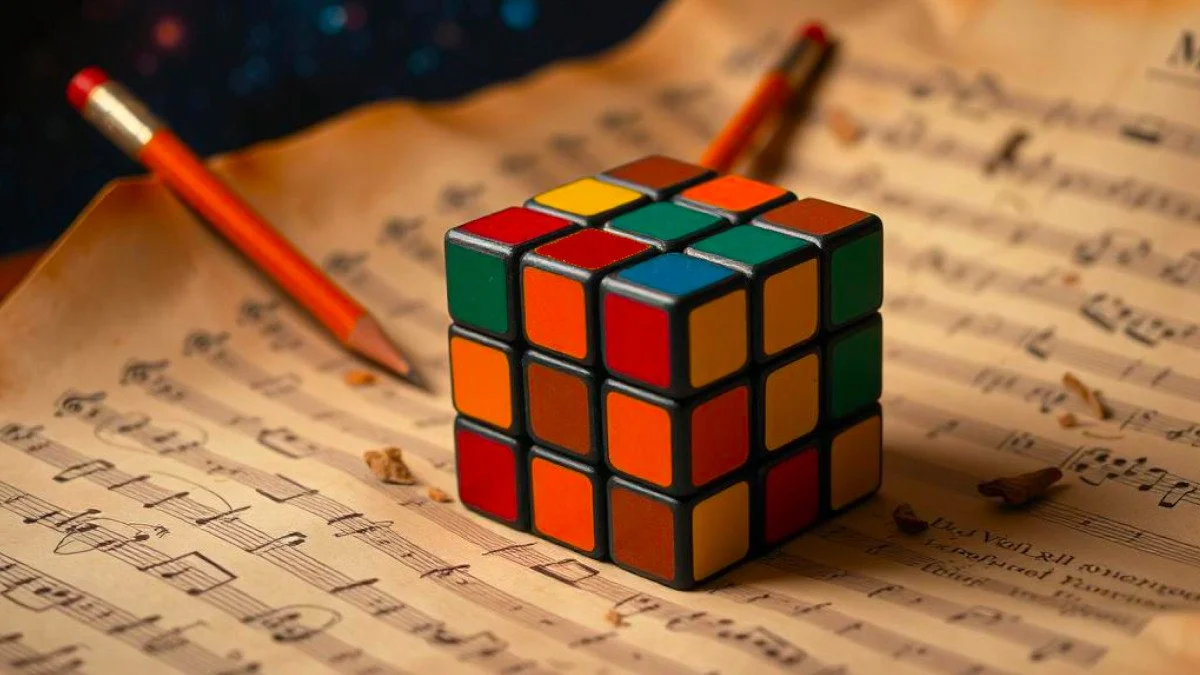
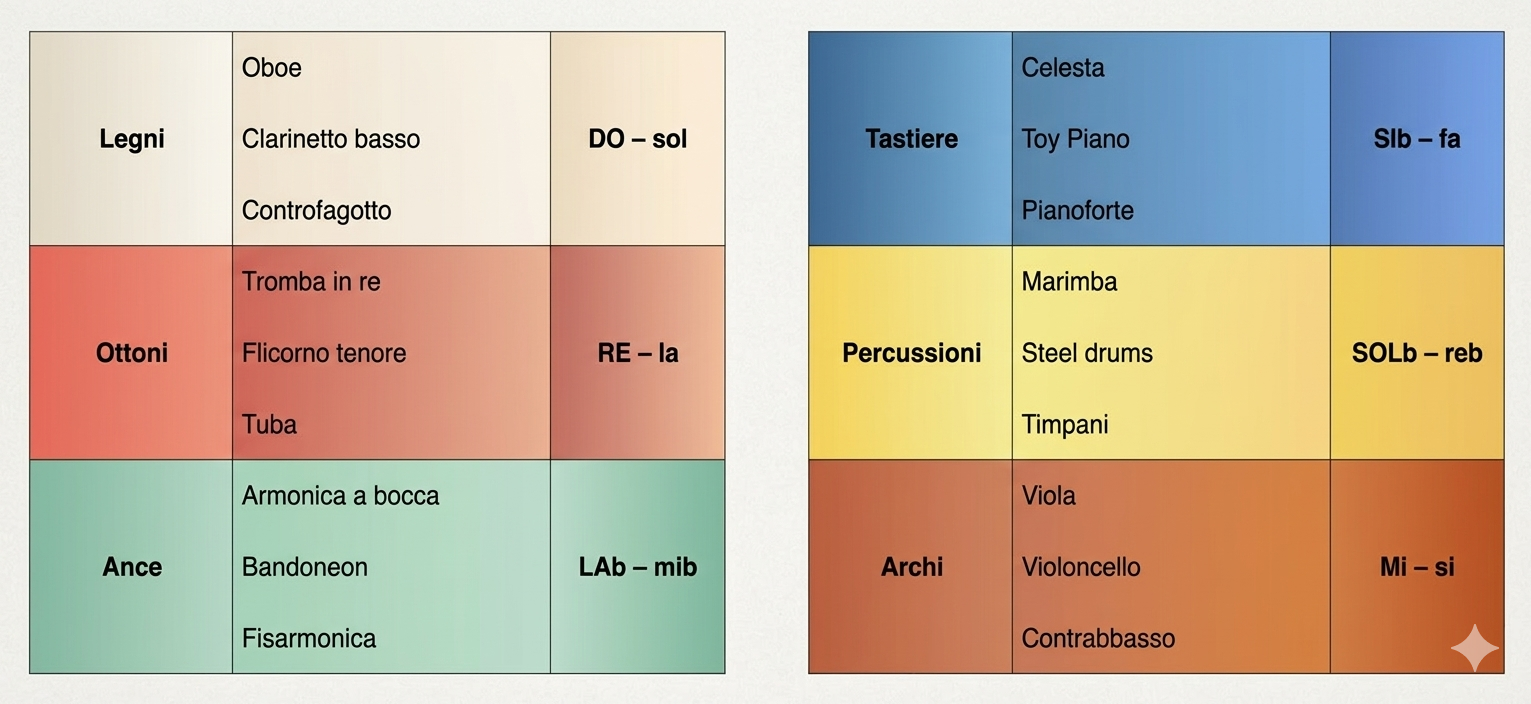
The genesis of the piece rests on a rigorous system of correspondence between the colors of the cube and the orchestral ensemble.
The six faces are associated with six instrumental families (from woodwinds to strings, keyboards to percussion), while the individual "stickers" determine the pitches.
The system employs two mirrored whole-tone scales that, by intertwining, cover the full chromatic spectrum. In this way, each configuration of the cube generates a unique sonic "mosaic," where the color arrangement on the front face dictates which instruments play and which notes are executed:
From Moves to Score: The Algorithm of Motion
The heart of the project is the translation of physical movement into musical dynamics.
Every "move" in the cube's resolution (such as U, R, F in international notation) is analyzed and transformed into a measure of the score. The color variety of a face determines the dynamics: a single color produces a fortissimo (ff), while the presence of all six colors leads to a pianissimo (pp).
The music thus becomes the acoustic chronicle of disorder tending toward order, reflecting the intellectual tension of seeking to restore each face to its chromatic unity.
Visual and Sonic Synchrony: An Ensemble of 18 Instruments
Scored for an ensemble of 18 instruments, Re Sol Ut Si.. ont! develops as a tight dialogue between mathematical logic and aesthetic perception. The duration of sounds and the articulation modes — legato, staccato, tremolo — are not arbitrary; they derive from the permanence or change of colors in the rotation sequences.
The result is a work of contemporary music that "plays" the logic of Rubik, offering the listener the sonic representation of a mental process that finds its final "resolution" in the perfect distribution of a sequence of perfect fifths.